01
Real-World Use Cases
Emergency response, environmental inspection, safety and security; indoor applications as a potential direction.
Projects begin with students: an idea, technology or real-world problem that several members genuinely care about. Students with aligned interests form a project team, define a common goal and combine their strengths to pursue it. The standard is clear: build an end-to-end solution, prove what it can do with measurable evidence, and develop the strongest work far enough to compete for serious recognition.
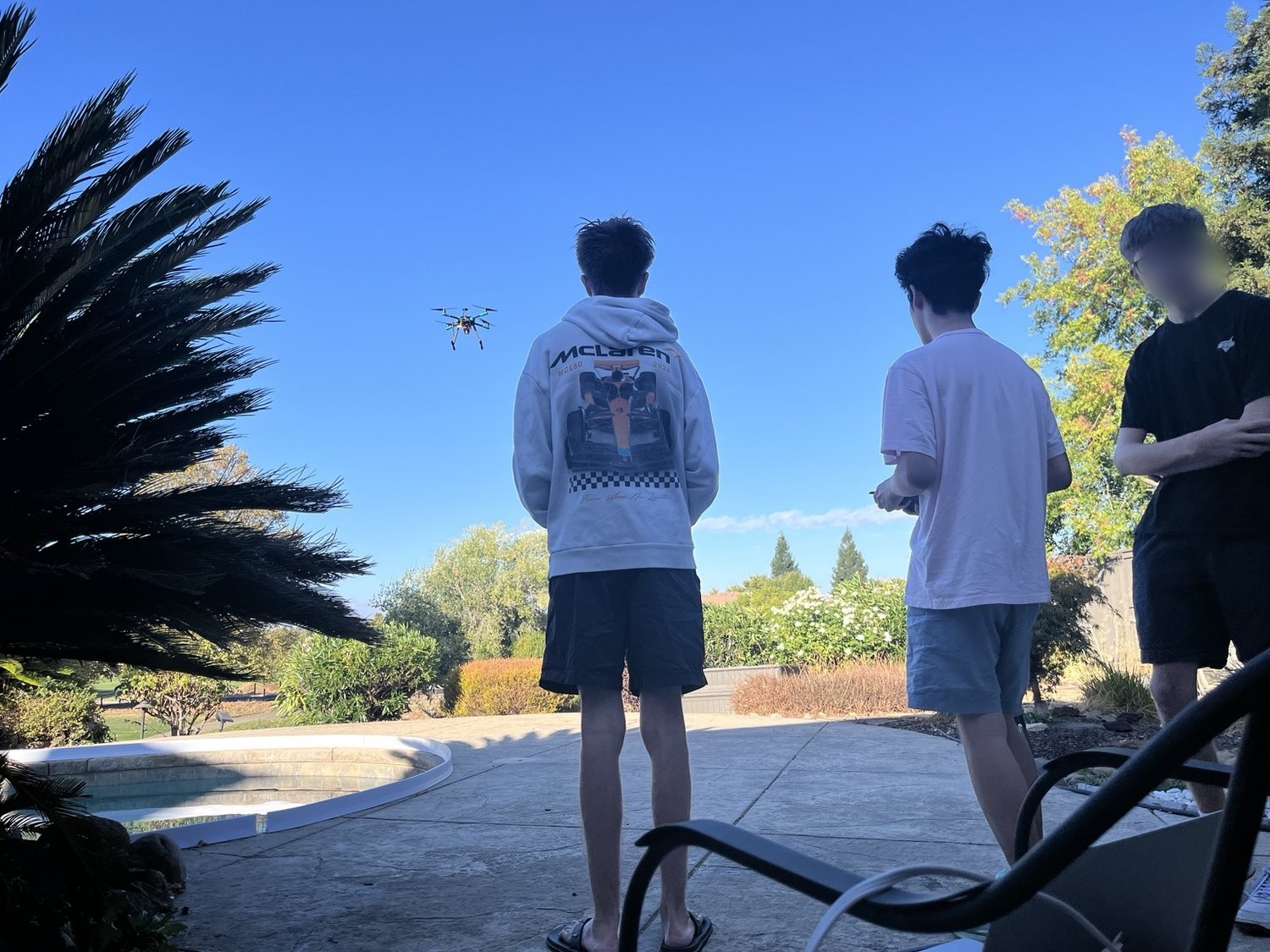
Computer vision, AI inference, navigation, obstacle avoidance, precision positioning and autonomous decision-making.
Safety inspection, environmental monitoring, emergency assessment and other problems where intelligent aerial systems can create practical value.
Define success metrics, collect data, quantify performance, document limitations and improve the system through repeated testing.
Project teams explore meaningful applications, design the full solution, investigate hard technical problems and build systems they can test. These are focus areas and intended outcomes, not claims that all projects are already underway or completed.
Emergency response, environmental inspection, safety and security; indoor applications as a potential direction.
End-to-end system design, shared components, use-case-specific requirements, industry practices and regulations.
Precision landing, human and anomaly detection, obstacle avoidance and hazard detection.
Integrate AI, software, sensors and hardware into working systems, experiments and demonstrations.
Mission: autonomously inspect a defined area and identify selected hazards or anomalies using computer vision.
Measure: detection accuracy, false positives, route repeatability and mission completion reliability.
Mission: combine vision and onboard sensing to land repeatedly on a specified target where ordinary GPS is not precise enough.
Measure: landing error, success rate, robustness under changing light and operating conditions.
Mission: collect imagery or sensor data autonomously and use AI to identify, map or quantify a condition of interest.
Measure: coverage, data quality, classification accuracy, repeatability and usefulness of the resulting analysis.
These are candidate missions, not claims of completed projects. Project teams help choose the problem, architecture, success criteria and competition strategy based on the interests and strengths of their members.
A technically strong project can sometimes be developed through different competition lenses, subject to each competition's current eligibility, originality and submission rules.
Best lens: innovation + technology + real-world impact. A strong destination for an integrated product or system with a compelling problem, design and use case.
Explore Conrad Challenge →Best lens: business or social venture. Frame the technology around the customer, beneficiary, value proposition and a credible path to impact.
Explore Diamond Challenge →Best lens: rigorous research or engineering. Define a research/engineering question, follow applicable rules, generate data and qualify through an affiliated fair.
Explore Regeneron ISEF →Best lens: differentiated entrepreneurial concept. Explain why the solution creates new value and communicate it through a concise, compelling pitch.
Explore Blue Ocean →The goal is not merely participation. It is evidence of what the team—and each student—actually accomplished.
A strong project should let a student explain the problem, the technical decisions, their personal contribution, what failed, what changed, what the data showed and why the final result matters.
TELL US ABOUT YOURSELF